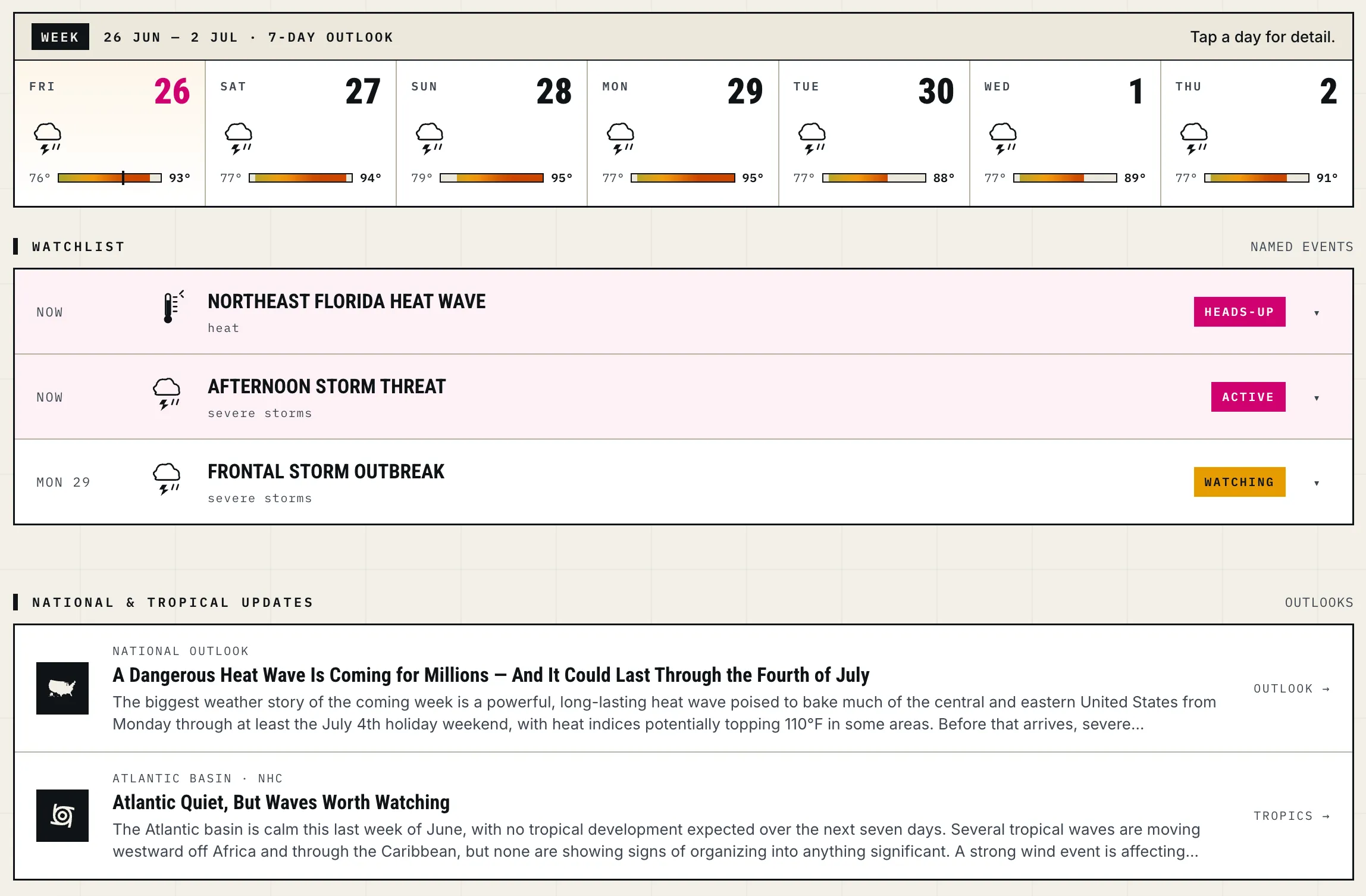
Why I built ForecastMaven.
I wanted to create the best weather guidance possible for an age when the risks from extreme weather events are escalating.
Did the world need another weather app?
I said yes. We have evidence from recent disasters - preventable flooding deaths in Western North Carolina from Helene in 2024, at Camp Mystic in Texas in 2025, and even in NYC from the remnants of Ida which trapped people in flooded basements.
The risks and damage caused by extreme weather events is escalating.
And a looming “Super” El Niño could exacerbate damage from flooding and severe weather in the US while parts of the wold bake under drought and severe heat.
- Over the last 10 years (2015–24), 190 separate billion-dollar disasters have killed at least 6,300 people and cost approximately $1.4 trillion in damage.
- 2024 was a record 14th consecutive year where the U.S. experienced 10 or more billion-dollar disasters and the fifth consecutive year (2020–24) where 18 or more billion-dollar disasters impacted the U.S
- The average time between billion-dollar disasters has plummeted from 82 days in the 1980s to just 15 days in recent years (2020-2024)
The problem is not the accuracy of our forecasts.
- Since Hurricane Andrew in 1992, NOAA has improved track accuracy by 75% and intensity forecasts by 50%
- A 5-day maximum temperature forecast today is about as accurate as a 3-day forecast was in 2002
- A 7-day maximum temperature forecast today is about as accurate as a 3-day forecast was in 1990
- A 2024 study found that recent hurricane forecasting advancements led to a 19% reduction in total hurricane-related costs - an average cost reduction of $5 billion per major hurricane
And in recent years, AI has made incredible strides in advancing the complex forecast models that predict the weather, yet people still fail to get timely information about looming risks or help understanding forecast uncertainty. We saw this in Texas and Asheville.
The problem is our attention.
People are abandoning the sources we have relied on - TV and radio broadcast meteorologists - for social media, where algorithms reward hype and misinformation.
And a little bit how current apps are built.
The apps on our phones do a great job alerting us to rain in the next hour and visualizing predictions, but don’t do a good job conveying uncertainty and explaining and explaining a range of outcomes. And they are notorious for harvesting user location data and selling to data marketplaces.
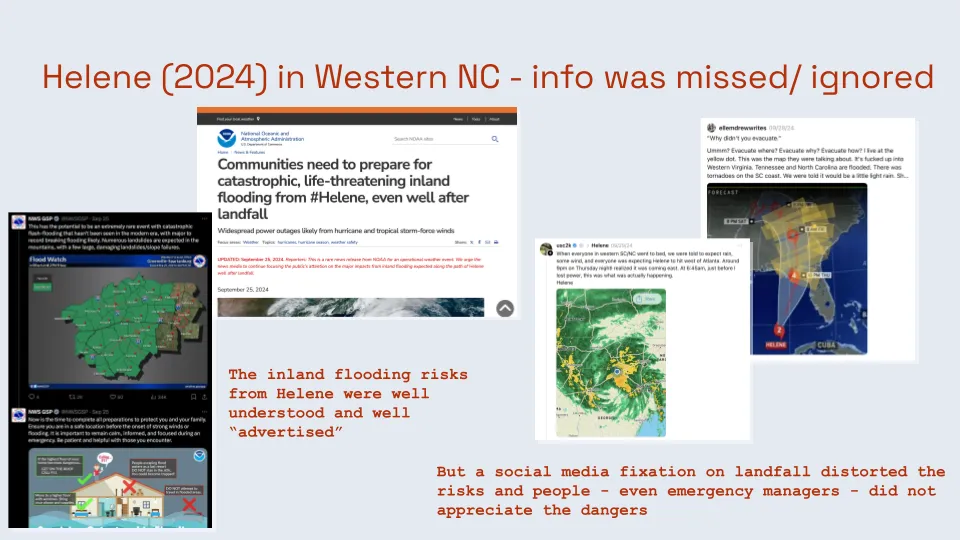
The inland flooding risks from Helene were well forecasted and communicated by the local National Weather Service office in Greenville, SC in the days ahead using increasingly dire language.
But as ProPublica reported, residents were caught off guard. Few had evacuated when the historic flooding materialized as forecast. I recall seeing in the days that followed posts on social from residents who were “surprised” - having been fixated on news coverage and social media hype of the storm’s landfall in Florida.
Cutting out the noise
ForecastMaven is an attempt to use the highest quality data and analysis available - from government forecasters and contributors who are watching the medium and long range for lurking threats. Gen AI offers a compelling solution to provide a clarity that could only otherwise be possible if a broadcast meteorologist spoke directly to you.
To do that, ForecastMaven offers:
- Personalized forecasts that explain the impact of the weather on your routine, property and wellbeing.
- Clear, hype-free headlines and guidance that translate the best forecast analyses available into digestible info.
- Identification of risks, hazards and and changing conditions in the days head.
- Comprehensive monitoring of tropical activity across the Atlantic and Pacific.
- Posts from mets and skilled hobbyists who are not chasing views on Facebook and TikTok.